


close
Choose Your Site
Global
Social Media


Views: 0 Author: Site Editor Publish Time: 2026-11-15 Origin: Site


Deploying electrical power systems in ocean environments presents severe operating challenges. Salt-laden marine air, perpetual humidity saturation, and constant electrolytic action relentlessly attack conventional energy storage. Standard commercial batteries quickly degrade under these unforgiving conditions. A sudden power loss miles offshore endangers vessel navigation, immobilizes propulsion systems, and halts critical bilge pumping. Bilge lockers and machinery spaces subject internal components to standing dampness and caustic salt atmospheres. Specifying an offshore-capable power bank requires rigorous engineering scrutiny rather than casual shopping. You must evaluate structural enclosure sealing, metallurgy selection, and advanced battery management safety. This comprehensive technical guide details the exact criteria required to select a robust Marine Battery built to conquer harsh saltwater operations safely and reliably.
Salt spray and humidity cause accelerated galvanic corrosion; marine terminal metallurgy and IP ratings must take precedence over generic capacity metrics.
Selecting a LiFePO4 marine battery delivers superior usable energy density and cycle life compared to AGM, but demands marine-specific charge profiles and cell-level balancing.
Enclosure design must balance ingress protection (minimum IP66/IP67) with internal pressure equalization to prevent seal failure during thermal cycling.
A marine-grade Battery Management System (BMS) requires conformal-coated electronics, moisture isolation, and marine communication protocol support (such as NMEA 2000).
Safe integration within a Yacht Battery Pack depends on matching alternator outputs, integrating DC-DC isolation, and complying with ABYC standards.
Saltwater acts as an aggressive liquid electrolyte. When two dissimilar metals touch in the presence of salt mist, galvanic corrosion starts immediately. An electrical potential difference drives electrons from the anodic metal toward the cathodic metal. Moisture films settle over battery terminals, accelerating this destructive chemical reaction.
Crevice corrosion occurs inside tiny gaps beneath terminal washers, cable lugs, and post seals. Trapped saltwater stagnates inside these microscopic voids, depleting local oxygen levels. The localized acidity spikes, stripping protective oxide films from the metal surfaces. Contact resistance increases dramatically across affected joints. Under heavy inverter draws, this resistance causes severe localized heating, terminal melt-down, and dangerous system voltage sags.
Evaporating seawater leaves behind dense, crystalline sodium chloride crusts. These crusts collect directly on battery lids, terminal boots, and nearby surfaces. Dry salt is non-conductive, but marine environments remain damp. Ambient coastal humidity regularly exceeds 85 percent, re-hydrating these mineral deposits into conductive pathways.
A conductive moisture film bridges the gap between positive and negative terminals. This bridge creates continuous parasitic discharge paths. The constant micro-amperage leakage drains stored energy silently during storage. In unventilated bilge spaces, this conductive path sparks erratic micro-arcing. Such arcing poses significant ignition hazards near machinery spaces.
Offshore vessels face continuous mechanical shock loads. Pounding through rough swells subjects hull compartments to repetitive high-G impacts. These severe dynamic forces flex rigid internal battery components. In traditional batteries, wave chop shears internal lead plate straps and cracks cell dividers. Lithium cells experience heavy strain across rigid terminal links.
Open-water operations also trigger thermal expansion differentials. Engine compartments run scorching hot during cruises, then cool rapidly after shutdown. Casings expand and contract constantly. Generic aftermarket casings develop hairline fractures along welded seams. Moisture then penetrates these micro-fractures directly into sensitive internal chemistry.
Marine electrical installations must follow established safety baselines to prevent catastrophic offshore fires. The American Boat and Yacht Council publishes strict guidelines for vessel builders and refit technicians:
ABYC E-10 (Storage Batteries): Dictates mechanical containment, ventilation requirements, terminal protection, and mandatory physical restraint systems capable of resisting vertical and horizontal G-forces.
ABYC E-11 (AC and DC Electrical Systems on Boats): Establishes direct-current circuit overcurrent protection, conductor sizing standards, system grounding isolation, and sustained continuous-load ratings.
SAE J1171 and ISO 8846 (Ignition Protection): Mandates that electrical devices operating in enclosed gasoline or battery compartments will not ignite surrounding flammable vapors during normal switching or internal fault conditions.
Absorbent Glass Mat (AGM) chemistry remains a traditional choice for engine starting tasks. It offers low upfront purchase pricing and widespread availability. However, AGM suffers from low usable capacity. Discharging an AGM past 50 percent depth of discharge (DoD) damages its internal lead plates. It also degrades quickly when kept at a partial state of charge (PSoC), developing stubborn lead-sulfate crystals across its negative plates.
Conversely, a LiFePO4 Marine Battery handles continuous 80 to 100 percent DoD cycles without structural degradation. It delivers stable operating voltage throughout its discharge curve. Sensitive radar systems, chartplotters, and communication radios run smoothly without display flickering or rebooting. A lithium bank weighs roughly one-third of an equivalent lead-acid system. This dramatic weight reduction improves vessel trim, increases cruise speeds, and frees up crucial payload limits.
Different vessel configurations impose distinct electrical duty demands:
Day Cruisers and Coastal Runabouts: These vessels operate short trips with minimal auxiliary loads. Sealed AGM batteries remain practical for direct engine cranking and brief stereo operation.
Offshore Sportfishing Boats: High-draw livewell pumps, multiple sonar units, and electric downriggers demand massive continuous energy. Hybrid setups pairing AGM starters with dedicated lithium house banks excel here.
Bluewater Cruisers and Liveaboards: Long voyages demand extensive off-grid autonomy. Induction cooking, watermakers, refrigeration, and modern air conditioning require high-capacity lithium banks capable of rapid solar and alternator recharging.
Commercial Workboats: Extended operating hours and heavy communication suites demand high cycle endurance. Lithium systems provide consistent operational up-time under non-stop cycling.
The comparative matrix below outlines structural and electrical performance differences across marine energy storage chemistries.
Table 1: Marine Energy Storage Chemistry Comparison
Operational Parameter | Marine AGM Battery | Marine LiFePO4 Battery |
|---|---|---|
Usable Depth of Discharge (DoD) | 50% recommended safe limit | 80% to 100% usable capacity |
Expected Service Cycles | 400 – 600 cycles (at 50% DoD) | 3,000 – 5,000+ cycles (at 80% DoD) |
Weight per Usable kWh | Heavy (~30 to 35 kg/kWh) | Ultra-light (~10 to 12 kg/kWh) |
Partial State of Charge (PSoC) Tolerance | Poor; causes rapid plate sulfation | Excellent; zero sulfation effects |
Voltage Curve Under Inverter Load | Steep drop; causes early inverter low-V cutoffs | Flat, stable plateau above 12.8V / 25.6V |
Recharge Efficiency Ratio | 75% – 85% (slow absorption phase) | 96% – 99% (rapid acceptance rate) |
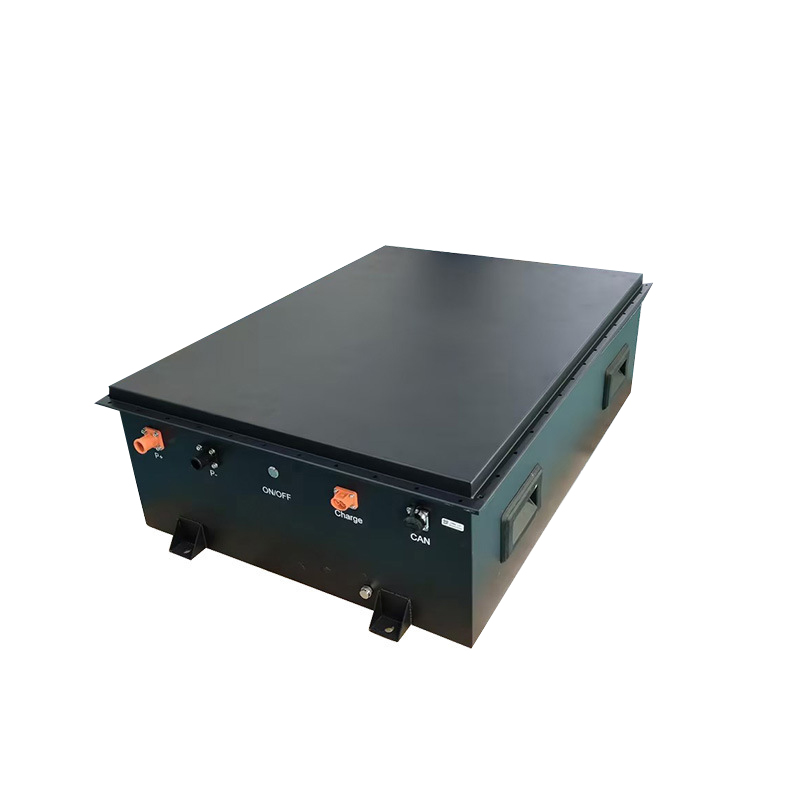
Vessel bilges are harsh, wet environments. Ordinary commercial batteries labeled vaguely as "water-resistant" routinely fail marine survey checks. Surveyors demand certified Ingress Protection (IP) ratings to guarantee safe saltwater service.
An IP65 rating protects against low-pressure water streams from standard washdown nozzles. It fails if a failed sea-cock or clogged bilge pump allows standing water to rise around the casing. IP66 handles intense, high-pressure waves breaking across deck storage boxes. IP67 provides robust immersion security, preventing liquid ingress when submerged up to one meter for thirty minutes. Deep bilge spaces and low lazarettes demand IP67 enclosures to survive emergency swamping events.
Battery enclosures must resist chemical degradation, fuel spills, and impact stresses. Inferior plastics crack after exposure to engine oils, diesel sheen, and UV sunlight. High-impact ABS and polycarbonate polymer blends provide exceptional flame retardancy and mechanical strength. For larger commercial installations, marine-grade aluminum treated with heavy anodized or marine epoxy powder coatings offers superior structural rigidity.
Enclosure sealing depends entirely on elastomer gaskets. Standard neoprene degrades when exposed to petroleum vapors and salt air. High-performance enclosures utilize fluorosilicone or ethylene propylene diene monomer (EPDM) perimeter O-rings. These resilient compounds resist ozone cracking, saltwater intrusion, and thermal hardening, maintaining watertight seals for many years.
Sealed battery boxes experience intense thermal cycling. Cruising machinery warms the enclosure interior, expanding internal air. When you shut down the engine, the compartment cools rapidly. Trapped air contracts, creating a strong internal vacuum. This phenomenon, known as thermal breathing, sucks moist, salty air past conventional perimeter gaskets.
Engineers solve this vacuum problem by integrating hydrophobic, oleophobic ePTFE membrane vents. These micro-porous membrane vents allow air molecules to move freely across the enclosure wall. Internal and external pressures equalize smoothly. Meanwhile, the specialized membrane repels liquid saltwater, fuel vapors, and airborne salt particles completely, preserving dry internal air.
Terminal posts endure continuous electrolytic exposure. Bare copper oxidizes rapidly in marine environments, generating high-resistance green verdigris crusts. Zinc-plated hardware fails within weeks when exposed to salt fog. Quality marine power units feature solid brass or heavy forged copper terminal posts coated with thick electro-tin plating meeting ASTM B545 specifications.
Tin plating provides an effective electrochemical barrier. It prevents galvanic mismatches when bolted to tinned copper cable lugs. This compatible metallic junction prevents accelerated oxidation, preserving low electrical resistance across high-amp connections.
Inside the battery housing, individual prismatic cells connect via heavy busbars. Pounding through ocean waves exerts massive shear forces on these internal electrical links. Stamped, thin copper strips can fracture under continuous marine vibration.
Engineered marine units utilize heavy-duty, nickel-plated or tinned copper busbars. These thick busbars attach directly to cell terminals using robotic laser welds or secure locking hardware. Solid laser welds eliminate mechanical fasteners that could loosen under cyclic wave impacts, guaranteeing uninterrupted internal current flow.
Reliable offshore electrical connections demand high-grade mounting hardware. Standard 304 stainless steel rusts in marine bilges. You must specify marine-grade 316 (A4) stainless steel studs, locknuts, and washers. Marine technicians utilize conical Belleville spring washers beneath terminal nuts. These spring washers maintain constant, unyielding clamping pressure as metals expand and contract through seasonal thermal cycles.
Field installers must coat clean, torqued metal connections with specialized dielectric barrier grease or Lanocote paste. This dense coating blocks ambient atmospheric oxygen and moisture. Finally, thick, flame-retardant silicone terminal insulating boots must cover every exposed conductor, preventing dropped metal tools from causing catastrophic dead shorts.
The Battery Management System acts as the intelligent brain of any modern lithium setup. Bilge humidity and airborne salt quickly destroy unprotected circuit boards. Tiny copper traces corrode, triggering catastrophic electronic malfunctions. Marine-grade BMS printed circuit boards (PCBs) undergo thorough environmental hardening.
Manufacturers apply thick, multi-layer conformal coatings compliant with MIL-I-46058C or IPC-CC-830 standards. This tough resin shield covers every surface-mount component, preventing moisture contact, tin dendrite growth, and stray current bridging. Premium manufacturers pot the entire BMS module inside waterproof, flame-retardant epoxy, isolating sensitive microcontrollers from external saltwater intrusion entirely.
Automotive or stationary solar BMS units lack safety logic designed for vessel operations. Marine-rated management units enforce critical operational protections:
Low-Temperature Charge Cutoff: Charging lithium cells below freezing (0°C / 32°F) causes permanent lithium metal plating on cell anodes, inducing internal dead shorts. The BMS halts incoming charging currents while allowing emergency discharging for safety systems.
High-Temperature Thermal Protection: Machinery lockers can exceed 50°C (122°F). The system isolates cells before thermal limits trigger internal degradation.
High Inductive Surge Suppression: Heavy marine loads, like high-volume bilge pumps and anchor windlasses, create massive inductive inrush currents. The BMS features multi-stage over-current trip limits to prevent nuisance trips during motor startup.
Cell Balancing Protocols: Active balancing circuits equalize individual cell voltages continuously, preventing over-voltage stress across adjacent cells during aggressive charging runs.
Modern vessels rely on integrated digital switching and unified monitoring networks. Advanced systems tie your Yacht Battery Pack directly into the shipboard data backbone. Galvanically isolated CANbus transceivers communicate directly with NMEA 2000 multi-function displays (MFDs) at the helm.
Captains can check exact State of Charge (SoC), historical cycle counts, cell balance, and real-time charging status from the navigation helm. Dedicated external shunts integrate with internal BMS logic, providing highly accurate amp-hour tracking without drifting out of calibration during extended offshore voyages.
Integrating lithium storage into an existing vessel requires careful charging system upgrades. Direct engine alternators present serious engineering risks. If the BMS suddenly disconnects a fully charged lithium bank to prevent over-voltage, the sudden load dump causes a massive inductive voltage spike. This spike fries the alternator's internal rectifier diodes instantly.
You can protect the vessel by installing dedicated marine DC-to-DC chargers or external smart alternator regulators featuring temperature monitoring. These devices regulate incoming alternator current, preventing alternator overheating at low cruising speeds. Marine battery chargers and solar controllers must support customizable, multi-stage charge profiles with specific bulk, absorption, and float setpoints, completely disabling automatic high-voltage equalization modes.
Secure physical restraint prevents heavy batteries from turning into dangerous projectiles in rough seas. ABYC standards mandate that batteries must not move more than one inch in any direction when subjected to heavy pull-forces. Technicians secure battery cases using heavy-duty fiberglass hold-down trays, through-bolted 316 stainless brackets, and wide polyester ratchet webbing.
Ensure adequate physical clearance around each battery casing. While sealed lithium cells do not vent explosive hydrogen gas during normal cycling, charging and discharging generate internal heat. Maintaining a two-inch airspace between adjacent cases facilitates convection cooling, preventing localized hot spots inside confined lazarettes.
Before purchasing energy storage hardware for marine service, evaluate manufacturers against this technical checklist:
Third-Party Safety Certifications: Verify authentic compliance documentation for UL 1973, UN 38.3, CE, and IEC 62619 marine electrical safety standards.
Saltwater Usage Warranty Provisions: Read the manufacturer warranty fine print carefully. Confirm that the policy covers coastal saltwater installations without restrictive marine voiding clauses.
Metallurgy and IP Ratings: Insist on certified test reports verifying IP66 or IP67 enclosure ratings, along with tinned copper terminal hardware.
BMS Architecture and Telemetry: Confirm the presence of conformal-coated PCB electronics, isolated communication links, and low-temperature charge prevention logic.
Technical Support Infrastructure: Ensure the vendor maintains accessible marine technical specialists, stock replacement hardware, and responsive field service support.
Surviving demanding offshore saltwater environments requires an uncompromising, engineered energy storage approach. Unprotected battery banks quickly succumb to aggressive galvanic corrosion, dielectric tracking faults, and internal component fractures caused by heavy wave action. Long-term reliability depends upon selecting high-integrity hardware featuring ASTM B545 tinned copper metallurgy, IP67 sealed enclosures with ePTFE pressure-equalizing vents, and fully potted, marine-logic BMS controls. Investing in marine-certified specifications rather than cheap commercial hardware guarantees your vessel retains vital propulsion, navigation, and bilge safety systems when severe offshore weather hits. Perform a complete electrical load calculation and inspect your compartment clearances today before upgrading your vessel's energy storage infrastructure.
A: No, an external plastic box is not enough. Standard battery boxes feature venting slots that let salty, humid air enter freely. When temperatures cycle, condensation collects inside the box, pooling around unsealed battery casings. Standard internal circuit boards and non-tinned terminals quickly corrode under this trapped moisture. You need an internally sealed battery built to IP66 or IP67 standards with conformal-coated electronics, even inside a secondary containment box.
A: IP65 only protects against low-pressure water spray from cleaning nozzles. It cannot stop water ingress if submerged. In yacht bilges, failed pumps or high seas can cause water to rise rapidly around the battery base. Rising water penetrates IP65 seals, creating dangerous dead shorts. IP67 enclosures survive complete immersion in one meter of water for thirty minutes, ensuring critical power survival during severe bilge flooding events.
A: Design an isolated, redundant electrical topology. Separate your vessel loads into dedicated engine cranking and house service banks connected via an intelligent DC-DC charger. Configure a marine BMS that outputs early warning pre-alarms via NMEA 2000 or audio buzzers before tripping low-voltage disconnects. This early warning gives crew members sufficient time to start engines or shed non-critical DC loads before navigation displays drop offline.
A: Yes, you should always apply dielectric grease or Lanocote to tinned terminals. While tin plating prevents initial galvanic corrosion between different metals, bolting cable lugs down causes microscopic surface abrasions. Ocean salt mist and damp air penetrate these micro-scratches, sparking crevice oxidation. A heavy layer of dielectric paste seals out moisture and oxygen, keeping your electrical connection cool and low-resistance for years.


