


close
Choose Your Site
Global
Social Media


Views: 0 Author: Site Editor Publish Time: 2026-11-13 Origin: Site


Upgrading or replacing an electric motorcycle battery requires more than just matching voltage and capacity. Ignoring continuous discharge current often leads to premature degradation, sudden shutdowns, or critical safety failures. When you mismatch the motor controller's amp draw and the battery's output capability, you encounter severe voltage sag. This often triggers frustrating Battery Management System (BMS) cutoffs during acceleration and generates excessive, damaging heat. To ensure long-term performance and reliability, you must understand the engineering behind power delivery. This article provides a clear framework for calculating the required continuous discharge current for your setup. We will explore how to interpret C-rates, match batteries to motor power ratings, and select the right power source for your ride. By following these technical guidelines, you can avoid common pitfalls and optimize your vehicle's torque and range.
Continuous Discharge Current is the maximum amperage a battery can safely output indefinitely without overheating or degrading.
C-Rate dictates this output relative to capacity: A 50Ah battery with a 2C rating delivers 100 Amps continuously.
Motor Matching: Your battery's continuous discharge rating must exceed your motor controller's maximum sustained amp draw by at least 20% to prevent BMS tripping.
Chemistry Matters: A 48V LiFePO4 battery pack offers superior thermal stability and lifespan, but often has a lower C-rate compared to NMC lithium-ion, requiring a larger capacity to achieve the same discharge current.
Every battery system operates under two distinct discharge profiles. Understanding these is essential for any E Motorcycle Battery selection. Continuous discharge refers to the current a battery handles safely for indefinite periods. This is the baseline for your cruising speed and steady operation.
Peak discharge represents a temporary burst of energy. You typically see this during rapid acceleration or steep climbs. Most batteries sustain these high currents for only three to ten seconds. Relying on peak ratings for sustained riding is a common mistake that leads to rapid overheating.
The C-rate formula is simple: Capacity (Ah) multiplied by the C-rating equals your maximum discharge current (A). For example, a 50Ah battery rated at 2C delivers 100 Amps continuously. If you push it beyond this limit, you risk damaging the internal cell structure.
Remember, the BMS remains your primary gatekeeper. Even if your cells can handle 150 Amps, a 100A BMS will trigger a cutoff the moment you hit 101A. You must view the BMS rating as the absolute maximum output limit for your entire system.
Your motor controller dictates how much power the motor demands from the battery pack. The motor only draws what the controller allows, but the controller requests that power directly from the cells. When the motor asks for more than the battery delivers, the system suffers.
The most immediate symptom of an under-specced battery is voltage sag. As you push the throttle, the battery voltage drops significantly. This causes your controller to struggle, leading to lower top speeds and sluggish performance. If the sag is too extreme, the BMS detects an under-voltage condition and shuts the bike down completely.
Over-speccing also carries a distinct set of trade-offs. While buying a battery with massive discharge capabilities sounds safe, it often limits your total energy density. High-discharge cells often provide less capacity in the same physical volume. You must balance your need for high current with your need for daily range.
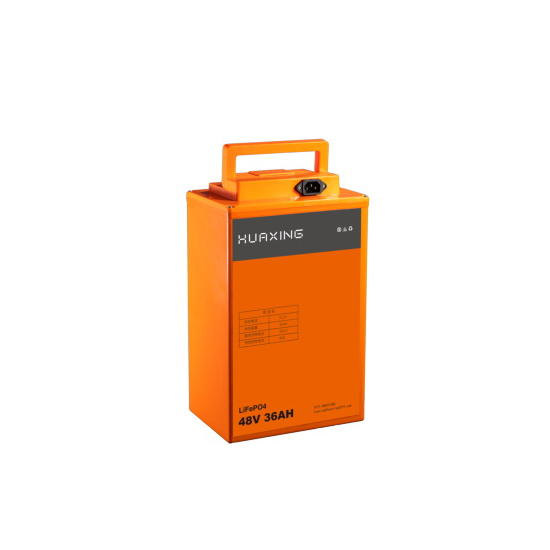
The choice between battery types depends entirely on how you ride. A Deep Cycle Motorcycle Battery is typically designed for sustained, lower-current delivery. These packs usually support rates around 0.5C to 1C. They prioritize long-range efficiency over raw torque output.
Conversely, performance e-motorcycles require high-discharge rate batteries. These packs handle 3C, 5C, or even higher ratings. They feature thicker internal busbars to reduce resistance and heavy-duty BMS hardware that can manage high-amperage surges without failing.
Performance Comparison Summary | ||
Feature | Standard Deep Cycle Pack | High Discharge Performance Pack |
|---|---|---|
C-Rating | 0.5C – 1C | 3C – 5C+ |
Primary Focus | Energy Density (Range) | Power Density (Torque) |
Typical Use | Delivery, Commuting | Off-Road, Sports |
Internal Build | Standard Gauge | Thick Busbars |
Lithium iron phosphate (LiFePO4) has become a popular standard for 48V electric motorcycle systems. This chemistry offers significant safety advantages. Unlike traditional Li-ion (NMC) chemistries, LiFePO4 is chemically stable and poses almost zero risk of thermal runaway during normal operation.
One major benefit involves cycle life. While lead-acid or standard lithium batteries might last 500 to 1,000 cycles, high-quality LiFePO4 packs often reach 3,000 to 5,000 cycles. This provides significant long-term value for consistent riders.
However, you must consider the C-rate trade-off. LiFePO4 cells inherently have lower maximum discharge ratings than some high-performance NMC cells. To power a high-wattage motor, like a 3000W system, you need more total capacity (Ah). Increasing your capacity allows you to maintain the required continuous amperage without over-stressing the individual cells.
A high-performance battery will not save you if the rest of your electrical system acts as a bottleneck. You must align your wiring with your expected current draw. If you push 100A through undersized cables, they will generate massive heat, potentially melting insulation and creating fire hazards.
Always verify your American Wire Gauge (AWG) requirements. Use professional-grade, high-amp connectors such as QS8 or XT150 for your main power lines. Standard terminals often fail under the consistent heat and vibration found on electric motorcycles.
Physical integration is also vital. High-discharge E Motorcycle Battery units often require larger enclosures. They need extra space for heat dissipation and large-capacity BMS heat sinks. Always confirm the battery dimensions before committing to a specific mounting location.
Use this structured approach to ensure your battery matches your bike’s performance needs perfectly:
Determine Controller Limit: Identify the maximum sustained amp rating on your specific controller.
Calculate Continuous Need: Divide your peak motor wattage by the nominal system voltage (e.g., 3000W / 48V = 62.5A).
Apply Safety Margin: Multiply this result by 1.2. A 62.5A requirement means you need a battery capable of at least 75A continuous discharge.
Verify Specifications: Cross-reference the manufacturer's datasheet for both the battery cells and the built-in BMS. Ensure both values meet your 75A target.
Check Physical Fit: Confirm that the battery size, weight, and terminal configuration fit your frame safely.
Never rely solely on voltage and capacity when making your final purchase. Request official specification sheets from the vendor to confirm the continuous discharge current. A reliable supplier will provide transparent ratings for both the cells and the management system.
A: Yes. The motor controller will only pull the current it needs to operate. Having extra discharge capacity reduces strain on the cells, lowers heat production, and extends the overall life of the pack, though it may result in a higher initial price point.
A: If the discharge rate is too low, the voltage will sag heavily under load. This causes the battery to heat up rapidly. Eventually, the BMS will trigger a protective shutdown to prevent fire or permanent damage to the cells.
A: Generally, no. AGM batteries suffer from the Peukert effect, which means their usable capacity drops significantly under high-current discharge. This makes them inefficient for high-speed riding compared to modern lithium-based chemistries.
A: Peak discharge ratings usually apply for short bursts of 3 to 10 seconds. This is designed for overcoming static inertia when starting from a dead stop and should never be considered a valid metric for cruising speed.


