


close
Choose Your Site
Global
Social Media


Views: 0 Author: Site Editor Publish Time: 2026-11-08 Origin: Site


Facility life-safety depends on reliable backup power during unexpected blackouts. An Emergency Light Battery serves as the unseen guardian of any commercial building. It guides occupants safely through darkened corridors. When grid power fails, panic sets in quickly. Proper illumination prevents accidents and ensures smooth evacuations. The National Fire Protection Association (NFPA 101) and local building codes mandate a strict 90-minute runtime for egress illumination. Falling short of this critical threshold risks severe regulatory penalties. More importantly, it compromises human safety during real-world emergencies. This guide translates complex electrical load calculations into a highly actionable workflow. We will demystify the math behind battery sizing for facility managers and electrical contractors. You will learn how to balance capacity requirements against total connected loads. Finally, we explore why upgrading your systems simplifies testing protocols and dramatically streamlines maintenance routines.
The 90-Minute Rule: All primary emergency lighting must maintain full intensity for 90 minutes during a power failure.
Capacity vs. Consumption: Total load (watts/amps) must be balanced against the battery’s Amp-hour (Ah) rating.
Technology Matters: Transitioning to LiFePO4 emergency light batteries reduces maintenance cycles compared to traditional lead-acid alternatives.
Validation: Regular testing is the only way to confirm a battery’s remaining useful life as it approaches the end of its typical cycle.
Every reliable backup system relies on basic electrical physics. You cannot size a battery correctly without understanding how power consumption works. The relationship between power, voltage, and current dictates your entire system design.
Electrical engineers use Watt's Law to determine power requirements. The fundamental formula states: $P (Watts) = V (Volts) \times I (Amps)$. Watts represent the total energy consumed by the lighting fixture. Volts measure the electrical pressure pushing the current. Amps measure the actual volume of electricity flowing through the circuit. To find the required current, you divide the total watts by the system voltage. This straightforward calculation forms the foundation of all runtime planning.
Most commercial setups utilize a central power pack connected to multiple remote illumination heads. You must aggregate the power consumption of every single component. This includes the primary exit sign, internal circuit boards, and all external LED heads. Ignoring a single remote lamp can cause premature system failure during an outage. Read the manufacturer specifications printed on each housing. Add these individual wattage numbers together to find your total connected load.
Older halogen backup fixtures draw significant amounts of energy. A typical twin-head halogen unit might consume 10 to 12 watts per lamp. Modern light-emitting diodes drastically alter these calculations. High-efficiency diodes provide identical lumen output while consuming just one or two watts. This efficiency shift allows for smaller, cooler components. Using an LED Emergency Lighting Battery Pack lets you maintain the required 90-minute runtime using a fraction of the physical space. The reduced current draw extends overall unit longevity and decreases internal heat generation.
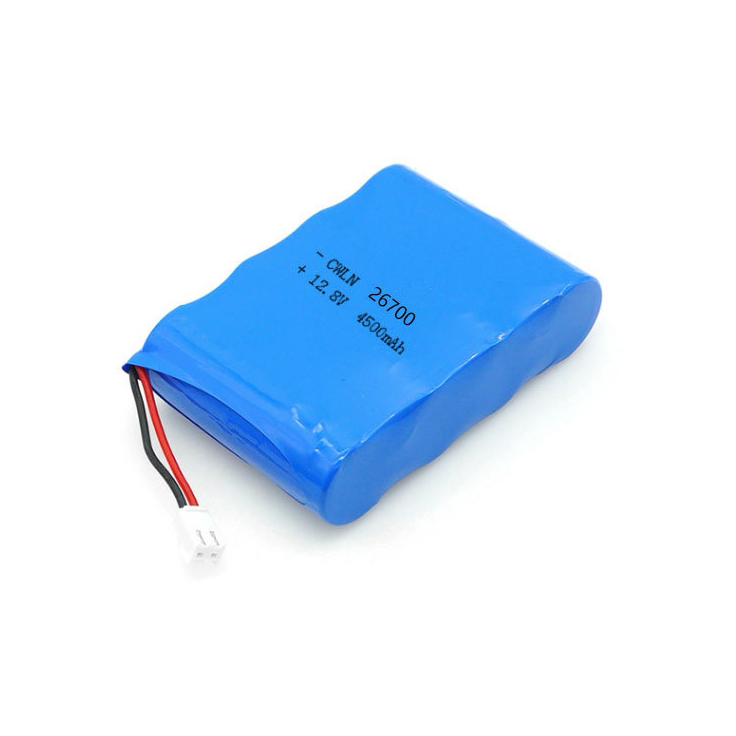
Guesswork has no place in life-safety compliance. You must size your power source based on precise numerical values. Follow this structured approach to determine your exact capacity needs.
Start by auditing the specific zone you want to protect. You need an accurate tally of all connected devices. Use the following structured checklist to guarantee accuracy:
Locate the main exit sign housing and record its internal illumination wattage.
Trace the DC output wires to find all connected remote lamp heads.
Check the data plates on every remote head for individual wattage ratings.
Sum all individual wattages to determine the maximum active draw.
For example, an exit sign drawing 3 watts connected to two remote heads drawing 2 watts each yields a total load of 7 watts.
The law requires absolute reliability for an hour and a half. You must convert your total wattage into energy consumed over time. Multiply your total connected load by the 1.5-hour mandate. Using our previous example, multiply 7 watts by 1.5 hours. This calculation gives you 10.5 Watt-hours (Wh). This number represents the absolute minimum energy required to survive a standard NFPA 101 test.
Batteries store energy in Amp-hours. You must convert your Watt-hour total into this standard measurement. Divide your Watt-hours by your system voltage. Typical commercial systems operate at either 6V or 12V. If our example system runs on 6 volts, you divide 10.5 Wh by 6V. The result is 1.75 Ah. A 12-volt system would require half that capacity, or 0.875 Ah. Always verify your system voltage before performing this step.
Real-world conditions degrade performance over time. A battery never performs perfectly forever. Cold ambient temperatures slow down chemical reactions, temporarily reducing output. Daily charge cycles slowly permanently erode internal capacity. You must add a 15 to 20% safety buffer to your final calculation. If your math requires 1.75 Ah, multiply it by 1.2. You should procure a unit rated for at least 2.1 Ah. This buffer ensures passing scores during annual tests even after years of active service.
Capacity calculations only solve half the problem. Selecting the correct internal chemistry determines how long the system will remain reliable. The industry is currently shifting away from legacy materials toward advanced lithium formulations.
Emergency Battery Chemistry Comparison
Feature | Lead-Acid (SLA) | Nickel-Cadmium (NiCd) | Lithium Iron Phosphate (LiFePO4) |
|---|---|---|---|
Energy Density | Low (Bulky) | Moderate | High (Compact) |
Discharge Curve | Gradual voltage drop | Steady drop | Flat (Consistent brightness) |
Typical Lifespan | 3–5 Years | 5–7 Years | 7–10+ Years |
Maintenance Level | High | Moderate | Minimal |
Sealed lead-acid units have dominated the market for decades. They offer cheap upfront acquisition but suffer from severe weight issues. Nickel-cadmium cells provide better temperature resistance but succumb to the dreaded memory effect. Upgrading to a LiFePO4 Emergency Light Battery changes the paradigm. Lithium Iron Phosphate provides exceptional energy density. They weigh significantly less than legacy alternatives. Furthermore, they deliver a perfectly flat discharge curve. The lights will remain intensely bright until the very last drop of energy is consumed.
Every battery degrades, but different chemistries age at drastically different rates. Lead-acid blocks typically require physical replacement every three to five years. Frequent replacement schedules disrupt facility operations and consume valuable maintenance hours. LiFePO4 chemistry vastly outperforms older technologies in terms of cycle life. They often last twice as long as traditional options. Choosing an advanced chemistry heavily reduces how often your technicians must climb ladders to swap dead units.
You cannot simply plug a new chemistry into an old circuit board. The internal charging circuitry must match the battery type. Lead-acid chargers provide a continuous float voltage. Applying this constant trickle charge to a lithium block will destroy the internal cells. Always verify the specifications printed on the primary control board. Ensure the charger outputs the correct voltage and utilizes an appropriate charging algorithm for your new replacement pack.
Installing the correct equipment represents only the first step. Strict regulatory frameworks govern how you must maintain these life-safety systems. Ignoring these rules endangers building occupants.
The Occupational Safety and Health Administration (OSHA) and NFPA 101 enforce rigorous testing schedules. Facilities must perform a 30-second functional test every single month. This quick check verifies basic circuit connectivity and bulb integrity. Additionally, a full 90-minute discharge test must occur annually. Technicians simulate a complete blackout to verify the storage capacity. You must maintain written logs of all testing activities for local fire marshals to review.
Age alone does not dictate replacement. The industry relies on the strict "80% capacity rule". A unit must be replaced when its total storage falls below 80% of its rated nameplate capacity. Once a battery crosses this degradation threshold, its decline accelerates rapidly. It will likely fail the next 90-minute runtime test. Proactive facility managers swap units immediately upon detecting this capacity drop, regardless of the physical age of the equipment.
Handling DC power requires careful attention to detail. Mishandling components can damage sensitive circuit boards or cause painful electrical shocks. Observe these critical best practices:
Always disconnect the main AC breaker before opening the fixture housing.
Never attempt a "hot-swap" while the primary charging circuit remains active.
Tape the exposed terminal ends of the old battery immediately upon removal.
Use insulated hand tools to prevent accidental shorts across the terminals.
Verify exact polarity (red to positive, black to negative) before final connection.
Sourcing replacements demands careful attention to technical details. A slightly incorrect dimension or terminal type can render a new purchase completely useless. Use a systematic approach when selecting new equipment.
Start your procurement process by verifying the exact system voltage. Next, measure the physical dimensions of the internal battery compartment. Lithium upgrades often fit easily, but high-capacity lead-acid replacements might prove too bulky. Check the required terminal type, typically F1 or F2 fast-on connectors. Finally, ensure the product carries a genuine UL 924 certification. This specific Underwriters Laboratories standard guarantees the product passes strict flame retardance and charge recovery tests.
Modern maintenance relies on smart diagnostics rather than manual guesswork. Traditional systems require physical load testers to verify internal resistance and voltage drop. Many modern exit signs feature built-in self-diagnostic circuitry. These smart boards automatically perform the required 30-second monthly tests. They display green LEDs for healthy systems and flashing red LEDs when capacity issues arise. Investing in self-diagnostic equipment significantly reduces manual labor hours.
Simple battery swaps rarely require outside help. However, extensive system upgrades present complex challenges. Engaging a licensed electrician becomes necessary when upgrading older halogen zones to modern LED fixtures. An electrician will verify the total circuit capacity. They ensure the existing wiring infrastructure can handle any modified voltage requirements. Professional consultation guarantees your upgraded system adheres perfectly to local fire codes.
Accurate runtime calculation goes far beyond simple mathematics. It remains a fundamental requirement for ensuring total building safety. Properly sizing your equipment guarantees occupants will never face a pitch-black evacuation scenario. Transitioning from legacy materials to advanced LiFePO4 technology simplifies long-term compliance. These modern solutions provide flatter discharge curves and drastically reduce the frequency of manual replacements.
You must establish strict monthly and annual testing routines to validate system readiness. Never ignore the 80% capacity rule when evaluating older equipment. We strongly encourage all facility managers to audit their current inventory today. Recalculate your loads, apply the necessary safety buffers, and ensure every single fixture confidently meets the 90-minute threshold.
A: The primary culprit is often a failed charger board rather than the battery itself. If the internal circuit board cannot supply the correct charging voltage, the new unit will slowly drain over time. Test the leads coming from the board. If no voltage is present, you must replace the entire fixture.
A: No. You must never mix chemistries. Different materials require entirely different charging algorithms. Supplying a continuous lead-acid float charge to a lithium or nickel-cadmium pack will cause severe overheating. It may destroy the internal cells and create a serious fire hazard. Always match the chemistry to the original board.
A: Yes. Ambient temperature heavily impacts chemical reactions. Cold environments increase internal resistance, which temporarily reduces available runtime. Excessive heat accelerates permanent capacity degradation. If your facility experiences temperature extremes, you must calculate a larger safety buffer to ensure you hit the 90-minute regulatory requirement.
A: General expectations range from three to five years for standard lead-acid units. However, this lifespan fluctuates based on environmental conditions and cycle frequency. Deep discharges during frequent power outages wear them out faster. Upgrading to advanced lithium chemistries can often double this expected lifespan under normal facility conditions.
A: Look directly at the manufacturer sticker on the outer casing. Products tested for life-safety applications will display a clear UL 924 certification mark. This label ensures the equipment passes rigorous testing for flame retardance, proper runtime endurance, and safe charge recovery after a complete blackout.


