


close
Choose Your Site
Global
Social Media


Views: 0 Author: Site Editor Publish Time: 2026-11-11 Origin: Site


Many golf cart owners experience range anxiety when their vehicle fails to meet the advertised distance on a single charge. This frustration often stems from a significant gap between theoretical manufacturer ratings and real-world performance under variable conditions. Estimating your range accurately requires more than glancing at a specification sheet. Instead, you must treat your battery as a reservoir of usable energy, measured in Watt-hours, rather than relying solely on Amp-hour ratings. By understanding how consumption rates fluctuate based on your driving habits, you can stop guessing and start planning. In this guide, we provide a reliable, variable-based framework to calculate exactly what energy capacity you need before purchasing a new Golf Cart Battery. You will learn to factor in terrain, passenger loads, and chemical differences to ensure you never find yourself stranded away from home.
Capacity vs. Usability: A 100Ah lead-acid battery only offers ~50Ah of usable capacity before risking damage, whereas a 100Ah LiFePO4 battery offers nearly 100% usable capacity.
The Weight Penalty: Every additional passenger (or 200 lbs of load) reduces effective range by approximately 5–10%.
Terrain Multipliers: Driving on steep hills, loose gravel, or tall grass can increase amp-draw by up to 50% compared to flat, paved roads.
Voltage Efficiency: Upgrading to a modern 51.2V Golf Cart Battery Pack ensures lower amperage draw for the same power, running cooler and more efficiently than traditional 48V setups.
Evaluating your power needs begins by shifting your focus from Amp-hours (Ah) to total Watt-hours (Wh). Think of Amp-hours as the size of the fuel tank, while Watt-hours represent the total energy available to push your cart forward. You calculate this by multiplying voltage by Amp-hours. A standard 48V cart consumes roughly 100 to 150 Watt-hours per mile on flat pavement. Depth of Discharge (DoD) remains critical when comparing technologies. If you own traditional lead-acid batteries, you must respect the 50% rule to avoid permanent internal damage. This means a 100Ah lead-acid pack only provides 50Ah of useful energy before the voltage drops sharply. In contrast, a LiFePO4 Golf Cart Battery maintains a stable voltage curve throughout the entire discharge cycle. You can safely utilize nearly 100% of its rated capacity without degrading the internal components. When you calculate your range, always verify how much of the "fuel tank" you can actually use.
Terrain acts as the most significant variable in your consumption equation. Climbing a steep incline forces your motor to pull exponentially more current to overcome gravity. These sudden spikes in amp-draw will drain your battery much faster than cruising on a flat surface. Surface friction also plays a vital role in your total distance. You should adjust your expectations based on where you drive.
Flat Asphalt: Use this as your 1x multiplier for baseline energy consumption.
Golf Course Fairways: Expect moderate resistance, requiring a 1.2x to 1.35x increase in power.
Off-Road/Mud: High resistance can increase your power draw by up to 1.5x.
If you live in a community with steep hills or frequently travel on loose gravel, do not rely on standard estimates. Instead, scale up your capacity requirements by at least 30%. This buffer prevents voltage sag that causes carts to enter "limp mode" during demanding rides. Always choose a battery capacity that handles the worst-case terrain you encounter regularly.
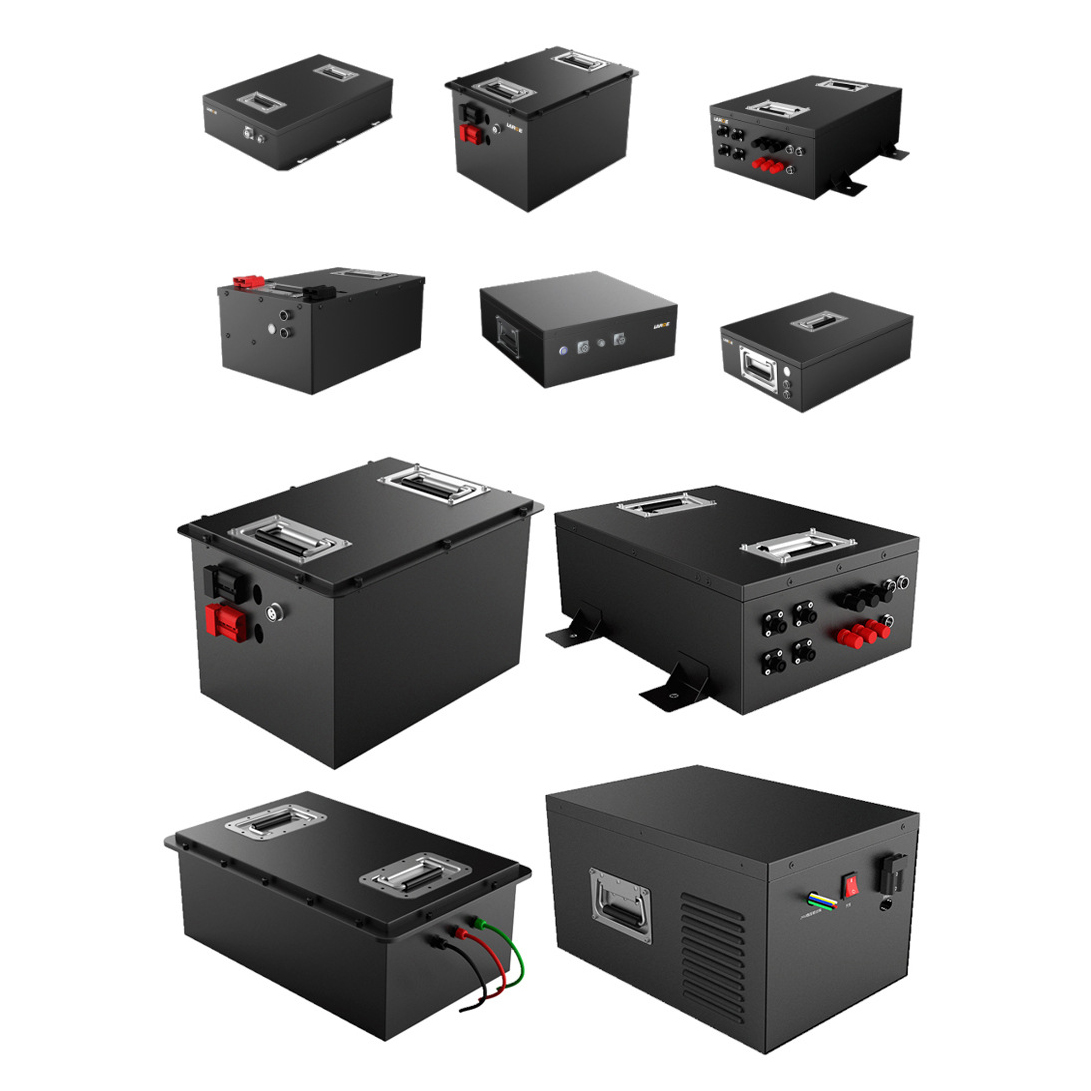
Your total gross weight directly correlates to energy consumption. A cart carrying one person is significantly more efficient than one carrying four passengers. Every additional 200 pounds of payload forces the motor to exert more force, which drains your energy reserves more quickly. Modifications often provide aesthetic benefits but impose a "range tax" on your battery. Consider these common factors:
Lift Kits: Larger tires increase the overall weight and rotational mass of the vehicle.
Tread Patterns: Aggressive off-road tires create more rolling resistance on pavement.
Controllers: High-torque motor upgrades often consume electricity at higher rates.
These factors combined can reduce your total range by up to 20%. If you have modified your cart for heavy-duty use, avoid entry-level 65Ah batteries. Stick to higher capacity units to maintain acceptable daily mileage.
Peukert’s Law describes how the available capacity of a lead-acid battery decreases as the discharge rate increases. If you drive aggressively up a hill, a lead-acid battery effectively shrinks in size. Your "100Ah" pack might only deliver 70Ah of performance during high-drain events. A LiFePO4 Golf Cart Battery ignores this phenomenon entirely. It delivers its full rated capacity regardless of how hard the motor pulls. Furthermore, switching to lithium sheds over 300 pounds of dead weight compared to a typical lead-acid setup. This weight reduction improves your cart’s acceleration and aerodynamic efficiency, providing an instant boost to your range that lead-acid users cannot achieve.
Selecting the correct battery involves balancing your specific usage patterns with the available energy tiers. Use the following table to estimate what your cart needs based on common usage profiles. Note that these figures assume a flat, paved environment and standard cart configurations.
Estimated Range Performance by Capacity Tier
Capacity Tier | Best For | Estimated Range (Miles) |
|---|---|---|
60Ah – 65Ah | Flat terrain, 2 passengers, stock tires | 15–20 |
100Ah – 105Ah | Neighborhoods, moderate hills, 4 passengers | 30–40 |
150Ah – 160Ah+ | Steep terrain, 6-passenger, off-road | 45–60+ |
When choosing your pack, consider upgrading to a 51.2V Golf Cart Battery Pack. This higher voltage provides slightly more total Watt-hours compared to nominal 48V systems. It also allows your motor to run more efficiently, often resulting in a higher top speed and cooler operating temperatures during long drives.
Advertised "max miles" represent ideal, unladen testing conditions that rarely mirror the real world. To ensure you remain satisfied with your purchase, you must audit your specific cart weight, terrain, and typical driving habits. Always calculate your needs based on your most demanding trips. Finally, we recommend padding your capacity requirements by at least 20%. This buffer accounts for battery aging over time, unexpected cold weather, and detours. By following this proactive strategy, you ensure your Golf Cart Battery provides the reliability you need for every journey.
A: A 100Ah lithium battery typically provides 30 to 40 miles of range in a standard 48V cart. This translates to roughly two to three hours of continuous driving time, though your specific results will vary based on passenger load and terrain. Unlike lead-acid alternatives, you can utilize the full capacity of this battery without damaging it, making it highly efficient for daily use.
A: Yes, it can offer a slight performance advantage. Because it operates at a higher voltage than a standard 48V nominal battery, it delivers more total Watt-hours for the same amount of stored charge. This often results in better motor efficiency and slightly improved speed, allowing you to cover more distance under optimal conditions.
A: Start with a 100% charge and use a GPS device to track your mileage on typical routes. Monitor your voltage drop carefully during the trip. We suggest stopping when you reach 20% capacity to avoid deep discharge and the risk of being stranded. This method provides a realistic baseline for your specific cart, terrain, and weight.
A: Yes, these modifications significantly impact efficiency. Larger, heavier tires increase rotational mass, while lift kits change the aerodynamics of the cart. Expect a reduction in range of approximately 15% to 25% compared to stock configurations. If you have a lifted cart, you should prioritize a higher Amp-hour capacity to compensate for this increased energy demand.


